Multi-Entity Zoho CRM Architecture for Showroom & Dealership Network Governance
This use case presents how Bamotors, a multi-brand automotive distributor operating through a central showroom and a network of dealerships, successfully unified its commercial operations using a segmented yet centralized Zoho CRM architecture.
The project addressed structural complexity related to multi-entity governance, data ownership, performance tracking, and operational autonomy.
Executive Summary
Bamotors manages its automotive business through a hybrid model combining a central showroom (brand owner level) and multiple dealerships operating with varying degrees of autonomy.
While this model supports growth, it introduces significant complexity in terms of data consistency, sales governance, and performance visibility.
Voom Digital was engaged to design a Zoho CRM architecture capable of reconciling two critical objectives: providing group-level visibility and control, while preserving the operational autonomy of each dealership.
“We needed a single source of truth for the group, without turning the CRM into a rigid system that limits our dealerships’ agility.”

Problem Statement & Key Challenges
Before the implementation, Bamotors faced several structural challenges:
Evaluation & Methodology
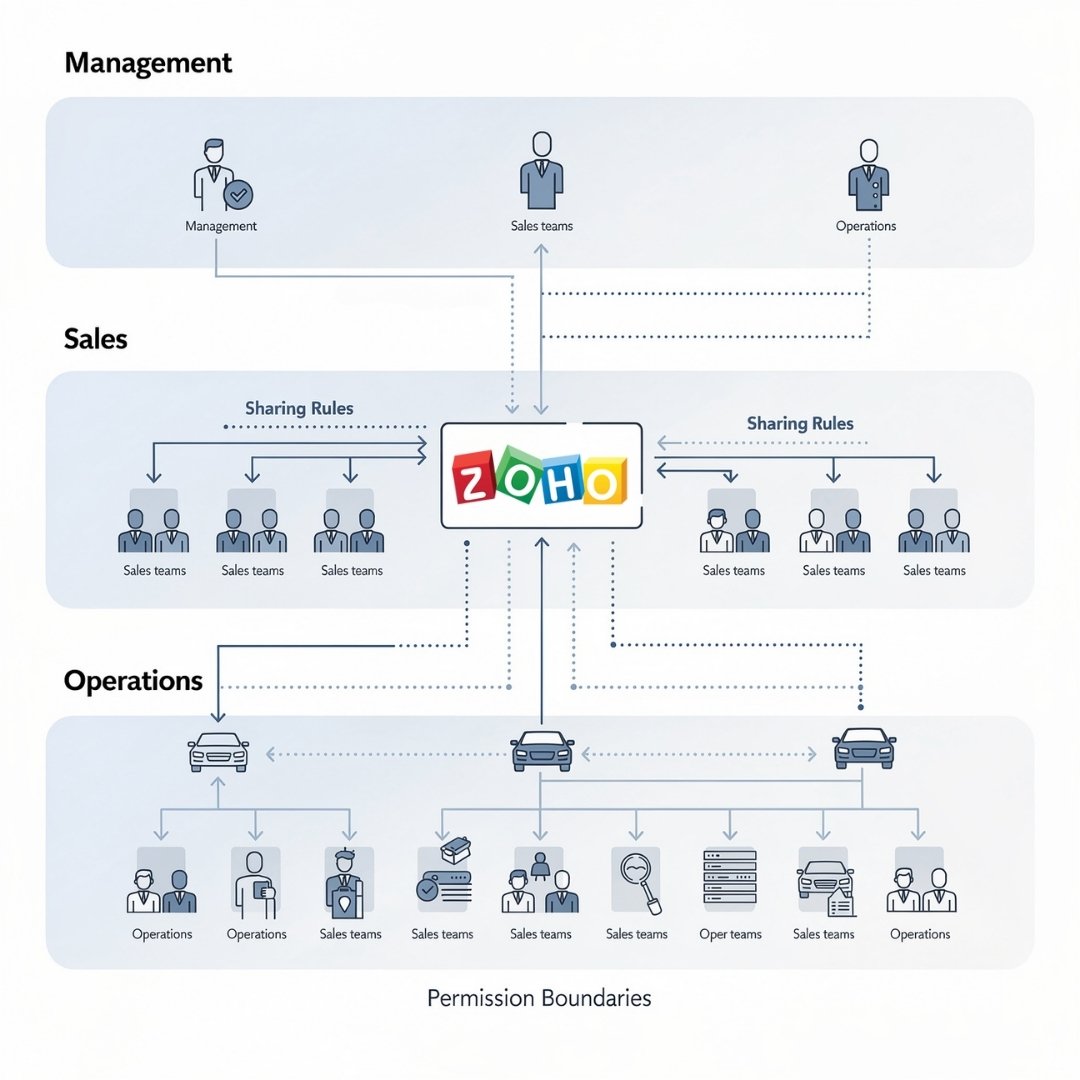
Voom Digital conducted a multi-layer diagnostic covering organizational structure, sales processes, decision-making flows, and reporting needs. Special attention was given to understanding how autonomy, accountability, and performance measurement interact within a dealership network.
This analysis confirmed that a single, flat CRM configuration would not be viable. Instead, a segmented architecture leveraging Zoho CRM’s advanced roles, permissions, and data sharing rules was required.
Proposed Solution
Multi-Structure Zoho CRM Design
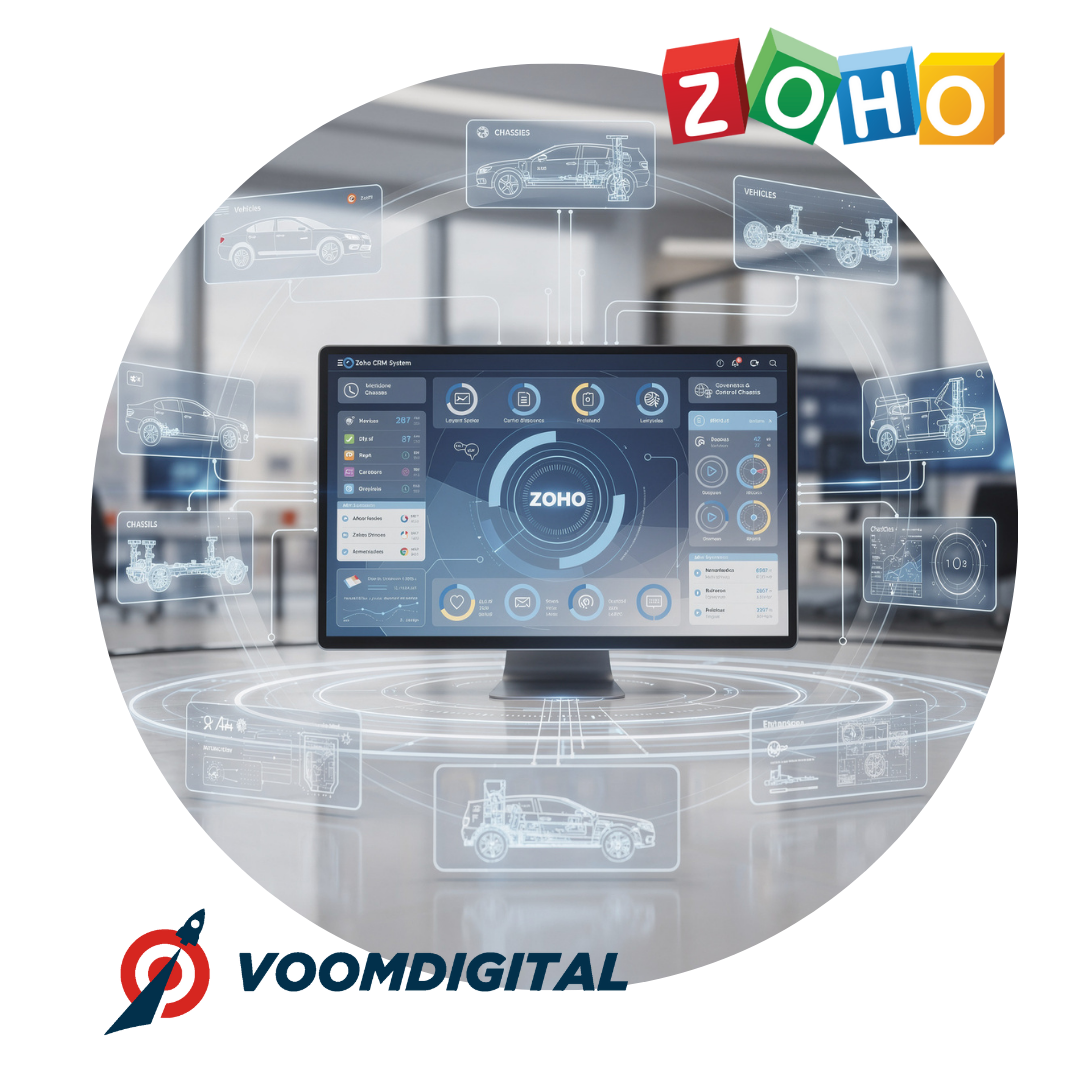
Zoho CRM was selected as the core platform due to its ability to support complex organizational models without data duplication or loss of control.
The implemented solution included :
Implementation & Execution
The implementation followed a phased deployment strategy, starting with the central showroom and gradually onboarding dealerships.
Voom Digital ensured data migration, user onboarding, and process alignment were executed without disrupting ongoing sales operations.
Custom validation rules and automation logic were introduced to prevent data conflicts while maintaining a smooth user experience for dealership teams.
Results & Business Impact
Post-implementation, Bamotors achieved tangible operational and strategic benefits:
“The CRM now reflects how our organization truly works. We have visibility at group level, and our dealerships operate with confidence and autonomy.”